Home Workouts for Lower Back Pain: 8 Easy Exercises
Lower back pain is one of the most common musculoskeletal complaints worldwide. According to the World Health Organization, low back pain is the leading cause of disability globally, affecting hundreds of millions of people each year. The good news? Many cases are mechanical in nature and respond well to targeted movement, posture correction, and strengthening routines performed at home.
In this guide, you’ll discover science-backed Home Workouts for Lower Back Pain that are safe, practical, and beginner-friendly. These exercises focus on spinal stability, hip mobility, and core strengthening—three essential pillars for long-term relief.
Why Home Workouts for Lower Back Pain Actually Work
Lower back pain often results from muscle imbalance, prolonged sitting, weak core muscles, or reduced hip mobility. Sedentary lifestyles shorten hip flexors and weaken glutes, which increases strain on the lumbar spine. Corrective home workouts address these root causes rather than masking symptoms.
Clinical research shows that structured exercise therapy significantly reduces chronic low back pain and improves function. Studies published in journals such as The Lancet and guidelines referenced by the National Institutes of Health emphasize movement over bed rest. Rest may temporarily reduce discomfort, but strengthening improves resilience.
When you perform controlled mobility drills and stabilization exercises, you enhance blood flow to spinal tissues. Improved circulation helps nutrient delivery to discs and surrounding muscles, supporting tissue recovery and reducing stiffness.
Consistency is key. Short daily sessions (10–20 minutes) performed correctly can provide better long-term outcomes than sporadic intense workouts. The goal is not exhaustion—it’s structural balance and neuromuscular control.
1. Pelvic Tilt – Restore Lumbar Control
The pelvic tilt is a foundational exercise for improving lumbar awareness and gentle core activation. It teaches you how to control the natural curve of your lower spine.
To perform it, lie on your back with knees bent and feet flat on the floor. Gently flatten your lower back into the floor by tightening your abdominal muscles. Hold for 5–10 seconds, then relax. Repeat 10–15 times.
This movement strengthens the transverse abdominis, a deep stabilizing muscle that supports the spine. Weak deep core muscles are commonly linked to recurring lower back discomfort.
Pelvic tilts are especially beneficial for beginners and those recovering from flare-ups. They reduce stiffness without placing excessive load on spinal discs.

2. Cat-Cow Stretch – Improve Spinal Mobility
The Cat-Cow stretch enhances spinal flexibility and reduces stiffness caused by prolonged sitting. It mobilizes the thoracic and lumbar spine in a controlled manner.
Begin on all fours. Inhale as you arch your back (Cow pose), lifting your chest and tailbone. Exhale as you round your spine (Cat pose), tucking your chin toward your chest. Move slowly for 10–15 repetitions.
This exercise improves spinal circulation and encourages synovial fluid movement within facet joints. Gentle mobility work like this is often recommended for morning stiffness.
It also promotes mindful breathing, which reduces muscle guarding—a common contributor to chronic lower back pain.
3. Bird Dog – Strengthen Core Stability
The Bird Dog exercise is widely recommended in physical therapy programs for spinal stabilization.
Start on hands and knees. Extend your right arm forward and left leg backward while keeping hips level. Hold for 5–10 seconds, then switch sides. Perform 8–10 reps per side.
Bird Dog activates the multifidus muscles—deep spinal stabilizers that are often weak in people with chronic back pain.
Maintaining a neutral spine during this movement trains anti-rotation strength, which protects the lower back during daily activities like lifting groceries.
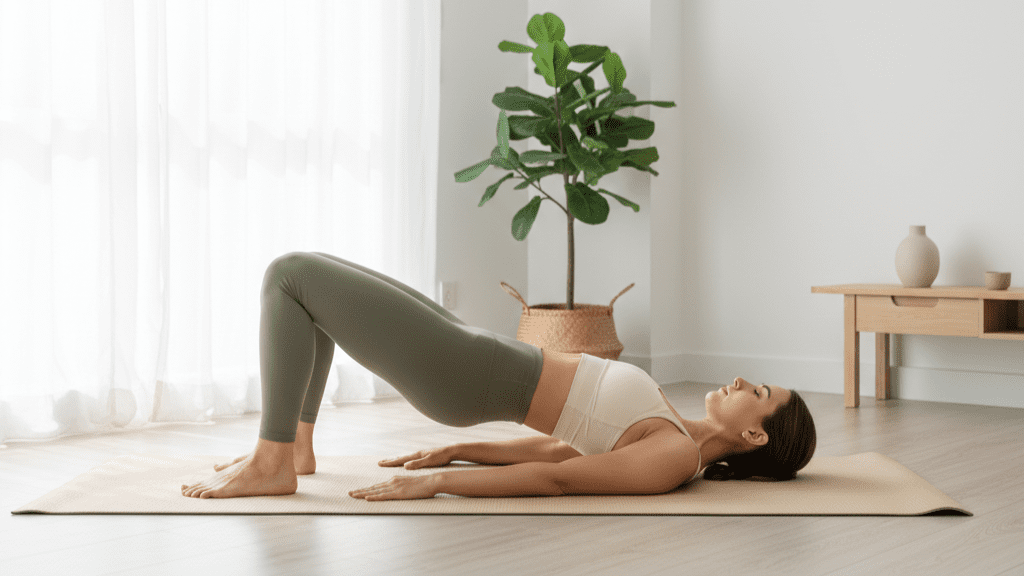
4. Glute Bridge – Activate Weak Glutes
Weak glute muscles increase stress on the lumbar spine. Glute bridges restore posterior chain strength.
Lie on your back with knees bent. Push through your heels and lift your hips until your body forms a straight line from shoulders to knees. Hold for 5 seconds, then lower slowly.
This movement strengthens the gluteus maximus and hamstrings, reducing compensatory strain on the lower back.
Stronger glutes improve posture, walking mechanics, and lifting technique—key components in preventing recurring pain.
5. Knee-to-Chest Stretch – Reduce Lumbar Tension
This stretch gently elongates the lower back muscles and relieves tightness.
Lie on your back and pull one knee toward your chest while keeping the other foot flat. Hold for 20–30 seconds and switch sides.
It reduces compression in the lumbar region and may temporarily relieve discomfort caused by prolonged sitting.
When performed slowly, it promotes relaxation and parasympathetic nervous system activation.
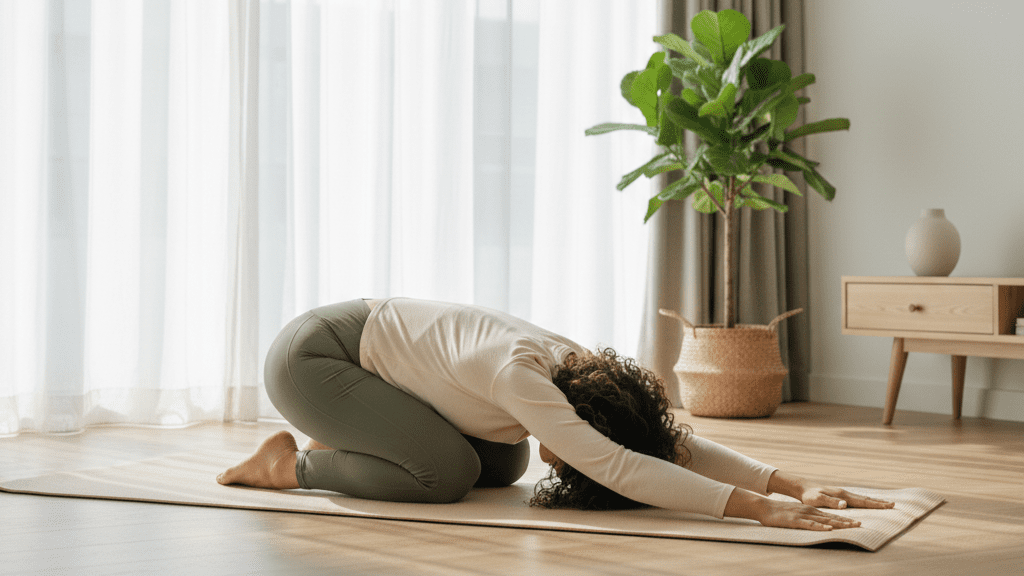
6. Child’s Pose – Gentle Decompression
Child’s Pose is commonly used in yoga to stretch the lower back and hips.
Kneel on the floor, sit back on your heels, and extend your arms forward while lowering your torso.
This posture elongates spinal muscles and gently decompresses vertebrae.
It is particularly helpful at the end of a workout session to reduce residual tension.
7. Partial Crunch – Strengthen Abdominals Safely
Unlike full sit-ups, partial crunches strengthen abdominal muscles without excessive spinal load.
Lie on your back with knees bent and arms crossed over your chest. Lift your shoulders slightly off the floor while tightening your abs.
Strong abdominal muscles support spinal alignment and reduce strain during daily movement.
Perform 10–15 controlled repetitions, focusing on form rather than height.
8. Wall Sit – Build Endurance Support
Wall sits improve endurance in glutes, quadriceps, and core stabilizers.
Stand with your back against a wall and slide down until knees form a 90-degree angle. Hold for 15–30 seconds.
Improved muscular endurance supports spinal alignment during prolonged standing.
This exercise enhances functional stability for daily tasks.

Safety Tips Before Starting Home Workouts
Not all lower back pain is mechanical. If pain radiates below the knee, causes numbness, or follows trauma, seek medical evaluation.
Individuals with disc herniation, spinal stenosis, or osteoporosis should consult healthcare providers before beginning new exercises.
Move slowly and stop if sharp pain occurs. Mild muscular discomfort is normal; nerve pain is not.
Consistency matters more than intensity. Progress gradually over weeks—not days.
Frequently Asked Questions (FAQ)
1. How often should I do home workouts for lower back pain?
Ideally 4–5 times per week, with sessions lasting 15–20 minutes.
2. Can exercise worsen lower back pain?
Improper technique can aggravate symptoms, but structured movement usually improves outcomes.
3. How long before I see results?
Most people notice improvement within 2–6 weeks of consistent practice.
4. Should I combine these with walking?
Yes. Low-impact aerobic exercise like walking improves circulation and recovery.
Conclusion: Consistency Creates Relief
Home Workouts for Lower Back Pain offer a safe, accessible, and evidence-based way to reduce discomfort and improve spinal health. By combining mobility work, stabilization exercises, and glute strengthening, you address the root causes of most mechanical back pain.
Start slowly, stay consistent, and focus on form. Small daily improvements lead to long-term resilience.