Home Workouts for Full Body: 12 Minutes a Day Success
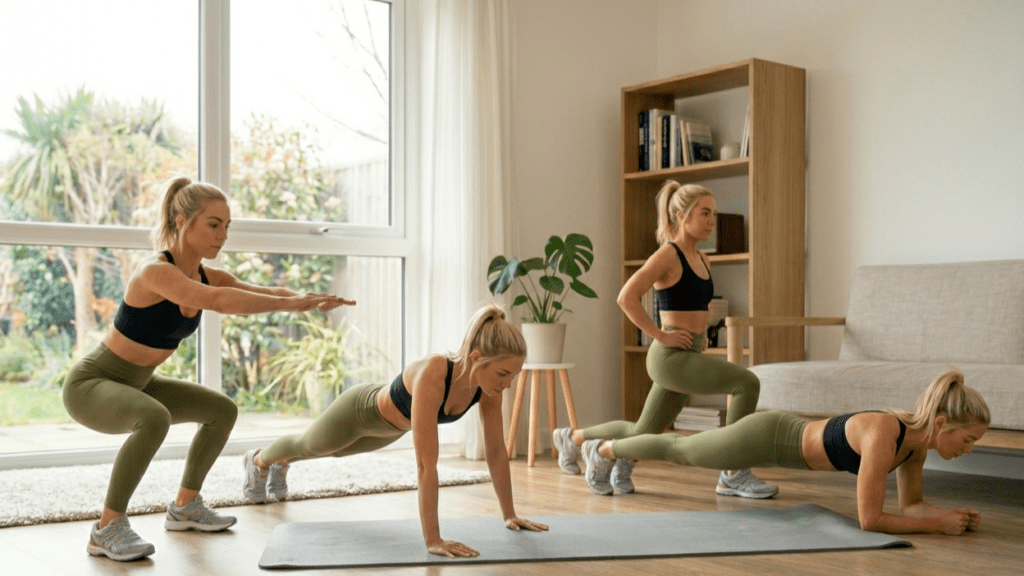
Modern life often leaves little time for long gym sessions. That’s why Home Workouts for Full Body have become one of the most searched fitness solutions for busy professionals, parents, and beginners alike. The good news? You don’t need fancy equipment or a full hour to build strength, improve endurance, and boost metabolism.
A well-designed 12-minute routine can activate all major muscle groups, elevate heart rate, and stimulate fat burning. Short, high-efficiency workouts are supported by research on high-intensity interval training (HIIT), which shows significant cardiovascular and muscular benefits even in brief sessions.
Below, you’ll discover a science-backed 12-minute full body routine with 12 powerful exercises—each explained with benefits and proper form guidance.
Why 12-Minute Full Body Home Workouts Actually Work
Short workouts can be surprisingly effective when intensity and structure are optimized. Research on interval training shows improvements in VO₂ max, insulin sensitivity, and muscular endurance even with brief sessions.
Full body activation increases calorie expenditure compared to isolated muscle workouts. Engaging multiple muscle groups simultaneously elevates heart rate and metabolic demand.
Consistency is easier to maintain when workouts are short. A 12-minute daily commitment reduces psychological resistance and improves long-term adherence.
Home workouts eliminate travel time, making it more likely you’ll stay consistent, especially during busy schedules.
How to Structure Your 12-Minute Routine
Perform each exercise for 40 seconds followed by 20 seconds of rest. Complete all 12 exercises once for a total of 12 minutes.
Focus on controlled movement and proper breathing. Quality matters more than speed.
Warm up for 2–3 minutes beforehand with light jumping jacks or arm circles.
Cool down with gentle stretching to improve flexibility and reduce muscle tightness.
1. Bodyweight Squats for Lower Body Strength
Squats target quadriceps, hamstrings, and glutes simultaneously.
They improve functional strength used in daily movements like sitting and lifting.
Keep your chest upright and push hips back to protect the knees.
Maintain heels on the floor throughout the movement.
2. Push-Ups for Upper Body Power
Push-ups strengthen chest, shoulders, triceps, and core.
They improve muscular endurance and posture stability.
Keep your body in a straight line from head to heels.
Modify on knees if needed to maintain proper form.
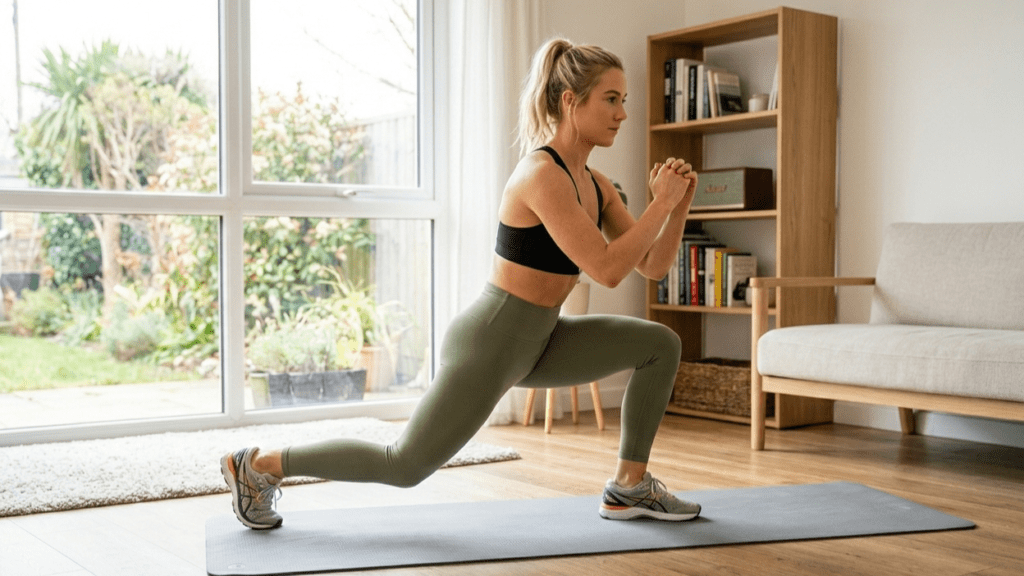
3. Forward Lunges for Balance and Stability
Lunges activate glutes and hamstrings effectively.
They enhance balance and unilateral leg strength.
Step forward gently and keep the front knee aligned with the ankle.
Alternate legs evenly during the interval.
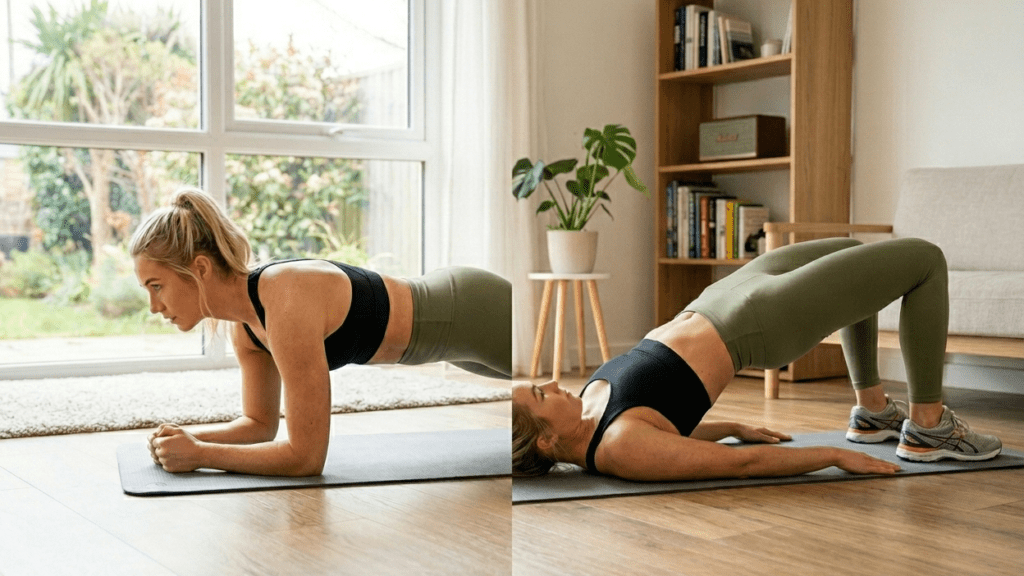
4. Plank Hold for Core Activation
Planks strengthen deep core muscles.
They improve spinal stability and posture.
Keep elbows under shoulders and engage abdominal muscles.
Avoid sagging hips to prevent lower back strain.
5. Jumping Jacks for Cardio Boost
Jumping jacks increase heart rate quickly.
They support cardiovascular endurance.
Keep movements controlled to reduce joint stress.
Land softly to protect knees and ankles.
6. Glute Bridges for Posterior Chain Strength
Glute bridges activate hip extensors.
They counteract prolonged sitting.
Press through heels to lift hips.
Squeeze glutes at the top for maximum benefit.
7. Mountain Climbers for Full Body Conditioning
Mountain climbers combine strength and cardio.
They activate shoulders, core, and legs simultaneously.
Maintain a steady rhythm instead of rushing.
Keep hips low to maximize core engagement.
8. Triceps Dips Using a Chair
Dips strengthen the back of the arms.
They enhance upper body endurance.
Keep elbows close to your body.
Avoid lowering too deep to protect shoulders.
9. High Knees for Fat Burning
High knees elevate heart rate quickly.
They improve coordination and agility.
Engage core muscles while lifting knees.
Land softly to minimize impact.
10. Superman Hold for Back Strength
This move strengthens lower back muscles.
It improves posture and spinal support.
Lift opposite arm and leg simultaneously.
Hold briefly before switching sides.
11. Side Plank for Oblique Strength
Side planks target oblique muscles.
They improve lateral stability.
Keep body aligned from head to feet.
Avoid dropping hips during the hold.
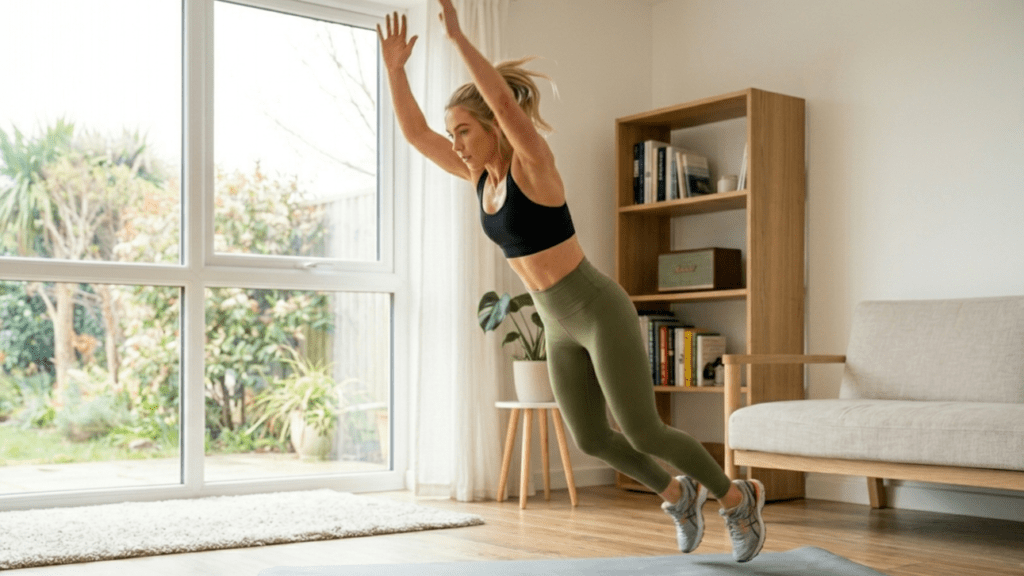
12. Burpees for Maximum Calorie Burn
Burpees combine squat, plank, and jump.
They deliver full body cardiovascular challenge.
Maintain controlled breathing throughout.
Modify by removing the jump if needed.
Frequently Asked Questions (FAQ)
Are 12-minute workouts effective?
Yes. When intensity is high and exercises target multiple muscle groups, short workouts can improve strength and endurance.
Can beginners follow this routine?
Absolutely. Modify movements and reduce pace as needed.
Do I need equipment?
No. These Home Workouts for Full Body use bodyweight only.
How many times per week should I train?
Aim for 4–6 days per week for best results.
Conclusion
Home Workouts for Full Body provide an efficient, accessible, and science-backed way to stay fit without gym access. By committing just 12 minutes daily, you can improve strength, cardiovascular health, and overall energy levels. Consistency remains the key to visible results.