Perfect Home Yoga for Beginners: 8 Poses
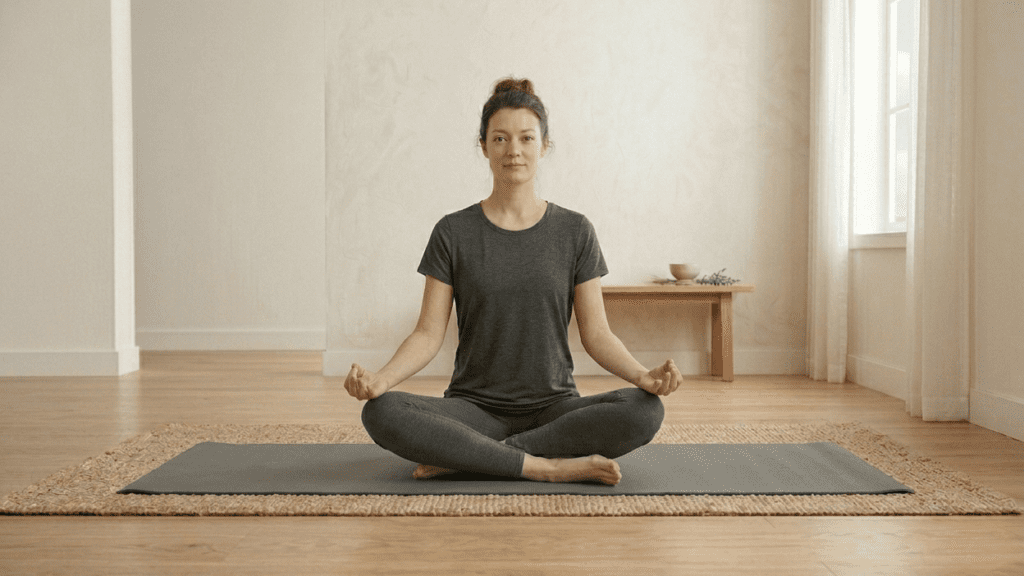
Starting a fitness routine can feel overwhelming, especially if you’re new to exercise. Home Yoga for Beginners offers a simple, accessible, and low-impact way to improve flexibility, strength, and mental well-being without needing a gym or expensive equipment.
Yoga combines physical movement, breathing techniques, and mindfulness, making it ideal for improving both body and mind. According to the National Center for Complementary and Integrative Health (NCCIH), regular yoga practice can reduce stress, improve mobility, and support overall health.
Practicing yoga at home allows you to move at your own pace, focus on proper form, and build confidence gradually. Even a few minutes each day can lead to noticeable improvements.
Below are 8 simple poses in Home Yoga for Beginners that you can safely practice to build a strong foundation.
1. Mountain Pose (Tadasana)
Mountain Pose is the foundation of all standing yoga poses and helps improve posture and balance.
Stand tall with your feet together, arms at your sides, and weight evenly distributed. Keep your shoulders relaxed and your spine straight.
Focus on your breathing while maintaining a steady posture. This helps increase body awareness and stability.
Although it looks simple, this pose strengthens your legs and core while improving posture over time.
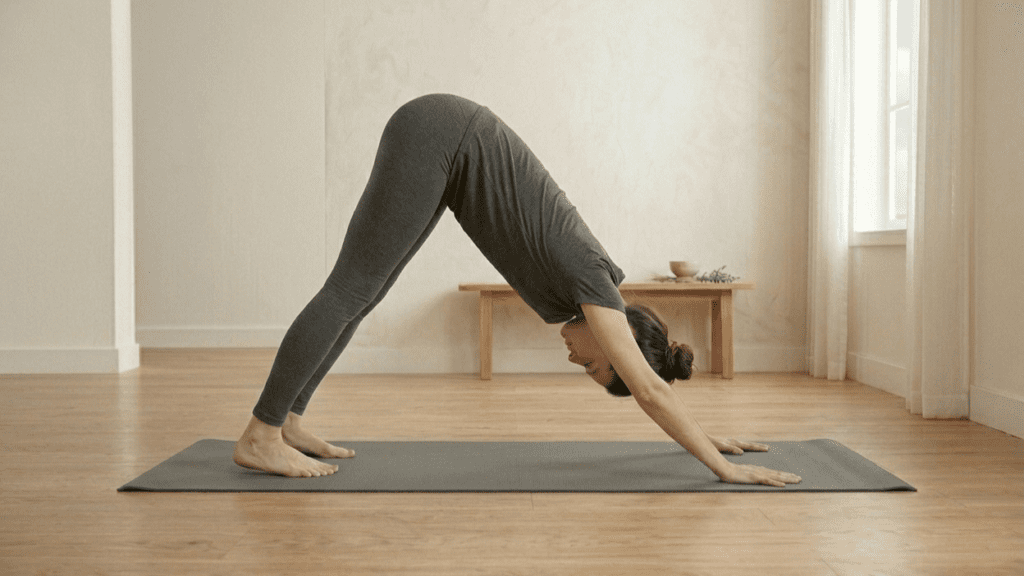
2. Downward Facing Dog (Adho Mukha Svanasana)
This pose stretches the entire body and strengthens the arms and legs.
Start on your hands and knees, then lift your hips upward to form an inverted “V” shape.
Keep your hands shoulder-width apart and your feet hip-width apart. Try to press your heels gently toward the floor.
Downward Facing Dog is one of the most common poses in home yoga for beginners and helps improve flexibility.
3. Child’s Pose (Balasana)
Child’s Pose is a resting position that helps relax the body and mind.
Kneel on the floor, sit back on your heels, and stretch your arms forward while lowering your forehead to the ground.
This pose gently stretches the back, hips, and shoulders.
It is often used between poses to recover and focus on breathing.
4. Cat-Cow Stretch
The Cat-Cow sequence improves spinal flexibility and promotes gentle movement.
Start on your hands and knees. Inhale as you arch your back (Cow Pose), then exhale as you round your spine (Cat Pose).
This flowing movement helps release tension in the back and neck.
It’s an essential part of home yoga for beginners, especially for warming up the body.
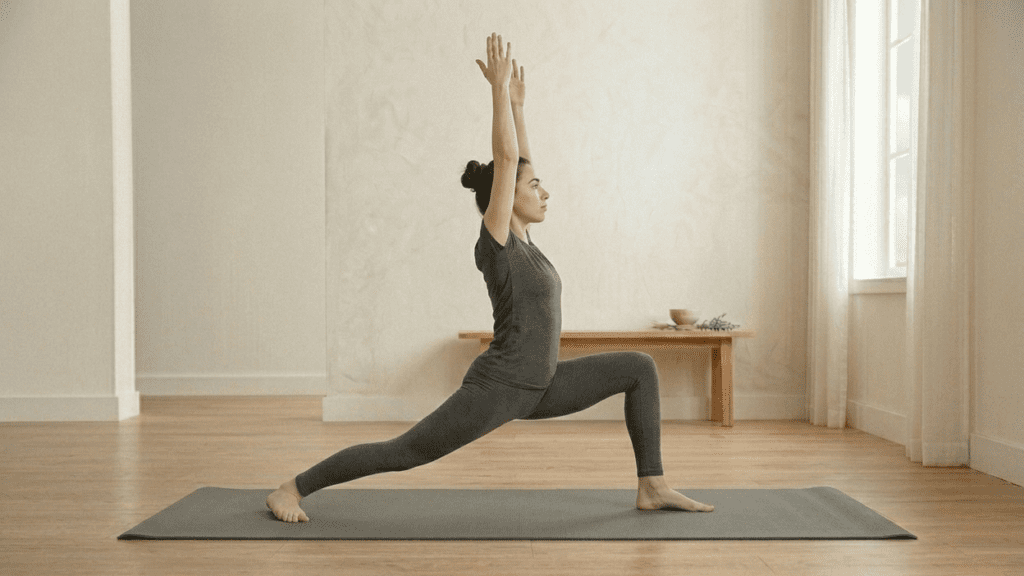
5. Warrior I (Virabhadrasana I)
Warrior I is a powerful standing pose that builds strength and stability.
Step one foot forward and bend your front knee while keeping the back leg straight. Raise your arms overhead.
This pose strengthens the legs, improves balance, and opens the chest.
It also helps build confidence and focus during your practice.
6. Tree Pose (Vrikshasana)
Tree Pose improves balance and concentration.
Stand on one leg and place the sole of the other foot on your inner thigh or calf. Bring your hands together at your chest.
Focus on a fixed point to help maintain balance.
This pose strengthens the legs and enhances mental focus.
7. Seated Forward Bend (Paschimottanasana)
This pose stretches the back and hamstrings while promoting relaxation.
Sit with your legs extended in front of you and reach forward toward your feet.
Keep your spine as straight as possible while bending forward.
It’s a calming pose that helps reduce stress and improve flexibility.
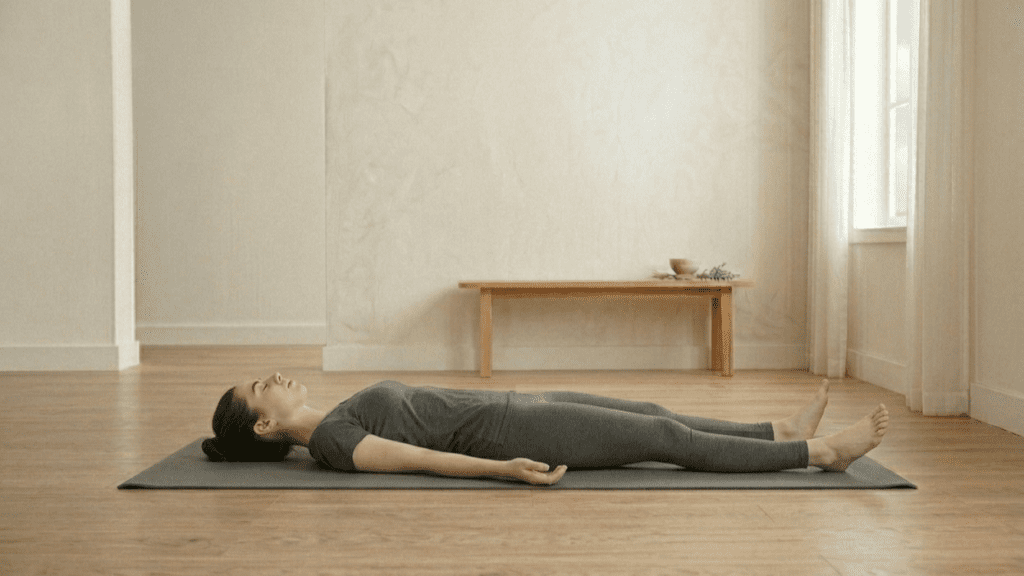
8. Corpse Pose (Savasana)
Corpse Pose is the final relaxation pose in most yoga sessions.
Lie flat on your back with your arms relaxed at your sides and your eyes closed.
Focus on your breathing and allow your body to fully relax.
This pose helps reduce stress and allows your body to absorb the benefits of your practice.
Frequently Asked Questions
How often should beginners practice yoga?
Beginners can start with 2–3 sessions per week and gradually increase frequency.
Do I need equipment for home yoga?
No. A yoga mat is helpful, but you can practice on any comfortable surface.
Is yoga suitable for all ages?
Yes. Yoga can be adapted for different fitness levels and age groups.
How long should a beginner session be?
A session can be as short as 10–20 minutes to start.
Conclusion
Practicing Home Yoga for Beginners is a simple and effective way to improve flexibility, strength, and mental clarity. These 8 poses provide a solid foundation for building a consistent yoga routine at home.
The key is to start slowly and focus on proper form and breathing. Over time, your confidence and ability will grow naturally.
By making yoga a regular part of your routine, you can enjoy long-term physical and mental health benefits.
Read our article about Yoga Poses for Flexibility