Herbal Teas for Stress Relief: 7 Powerful & Calming Options That Truly Work
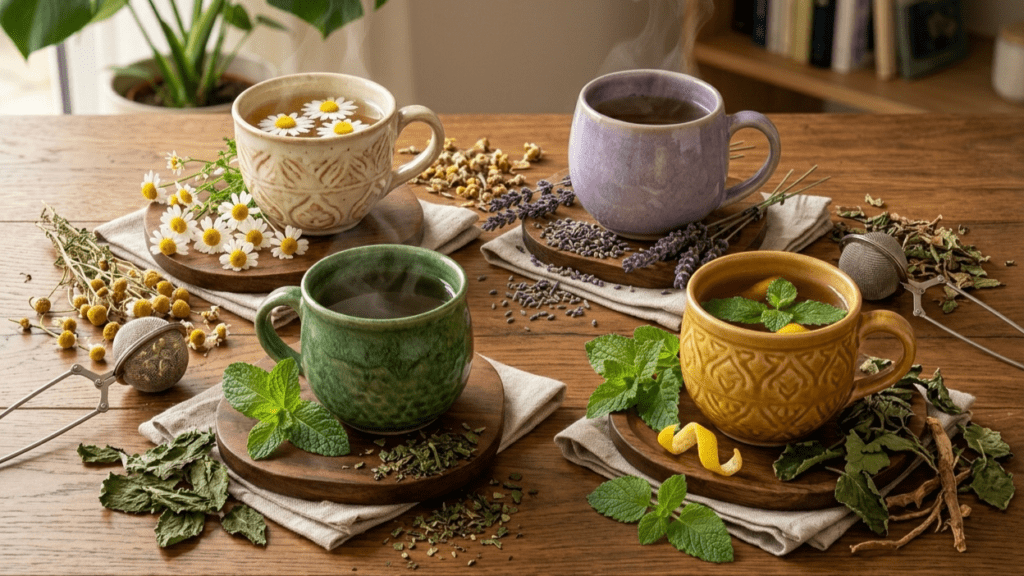
Stress has become a daily reality for many people, affecting sleep, mood, digestion, and overall well-being. While lifestyle changes like exercise and meditation help, many individuals turn to Herbal Teas for Stress Relief as a natural, gentle solution to calm the nervous system.
Certain herbs contain bioactive compounds that interact with neurotransmitters, promote relaxation, and reduce cortisol levels. In this guide, we explore seven scientifically supported calming teas that may help you unwind naturally and safely.
Why Herbal Teas Help Calm the Nervous System Naturally
Herbal teas work primarily by supporting the parasympathetic nervous system, often called the “rest and digest” state. This helps counteract the stress-driven “fight or flight” response.
Many calming herbs contain flavonoids and volatile oils that influence GABA receptors in the brain. GABA is a neurotransmitter responsible for relaxation and reduced anxiety.
Warm beverages themselves create a soothing psychological ritual, reinforcing relaxation through sensory experience.
Unlike synthetic sedatives, herbal teas typically offer mild effects without dependency when used appropriately.
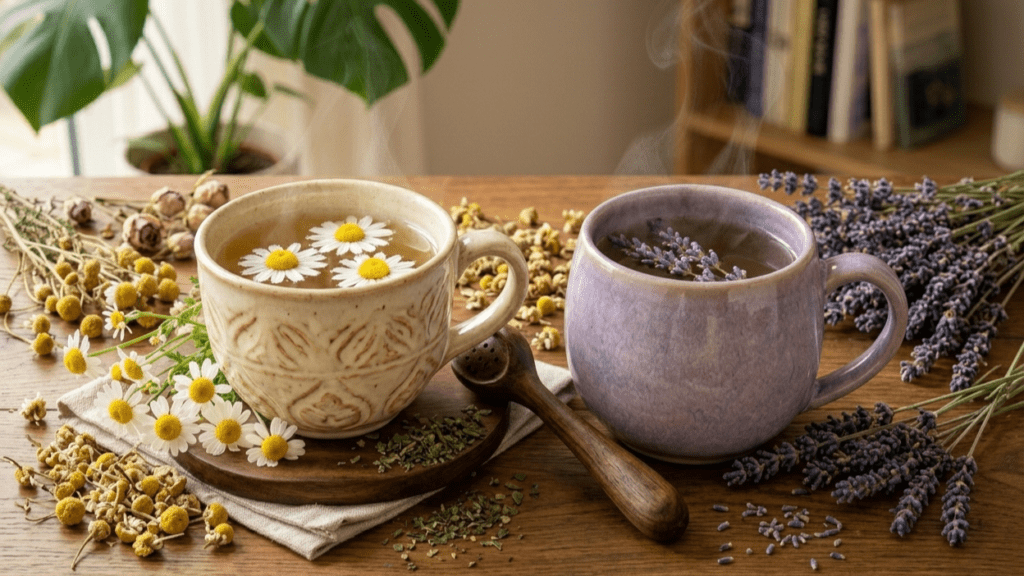
1. Chamomile Tea – The Gentle Classic Relaxer
Chamomile is one of the most researched calming herbs. It contains apigenin, an antioxidant that binds to brain receptors linked to anxiety reduction.
Studies suggest chamomile may improve mild generalized anxiety symptoms and enhance sleep quality.
It may also soothe digestive discomfort often associated with stress.
Drinking chamomile tea 30–60 minutes before bedtime can promote deeper relaxation.
2. Lavender Tea – Aromatic and Deeply Soothing
Lavender is widely known for its calming scent, but it also offers benefits when consumed as tea.
Its essential oils may reduce nervous tension and improve mood balance.
Lavender tea may help decrease restlessness and mild insomnia.
The floral aroma enhances the relaxation response through olfactory pathways.
3. Lemon Balm Tea – A Natural Mood Booster
Lemon balm belongs to the mint family and has been used traditionally to ease anxiety.
Research indicates it may improve cognitive performance while reducing stress markers.
It can also help relieve stress-related digestive upset.
Its mild citrus flavor makes it easy to incorporate into daily routines.
4. Peppermint Tea – Refreshing Stress Relief
Peppermint tea is known for its cooling and refreshing properties.
While often used for digestion, it may indirectly relieve stress by reducing physical tension.
The menthol aroma can enhance alert calmness.
It is particularly helpful during daytime stress episodes.
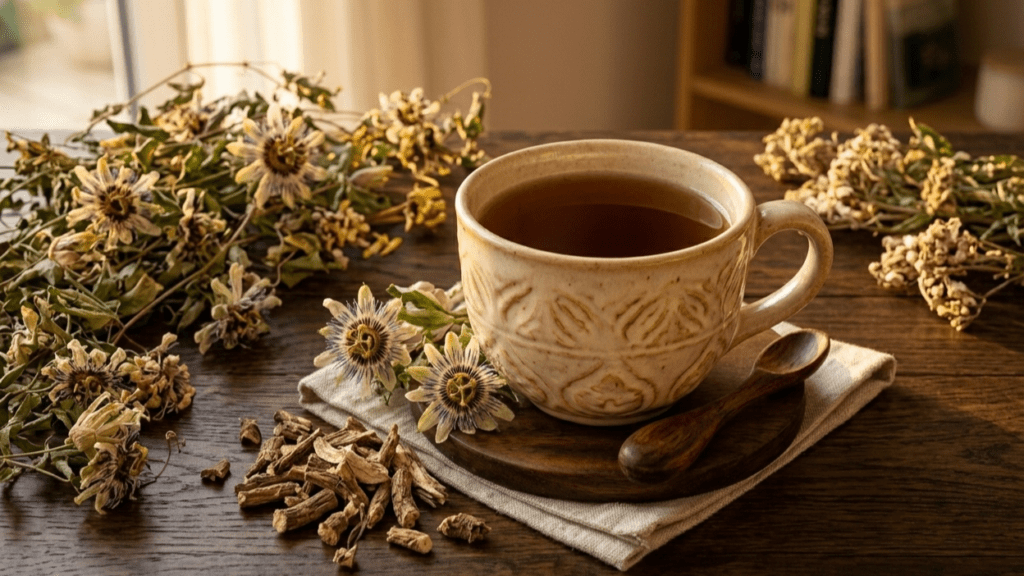
5. Passionflower Tea – Supporting Restful Sleep
Passionflower is known to increase GABA activity in the brain.
It may reduce anxiety symptoms and improve sleep onset.
Some small clinical studies suggest comparable mild effects to certain anti-anxiety medications.
Its earthy flavor pairs well with chamomile.
6. Ashwagandha Tea – Adaptogenic Support
Ashwagandha is classified as an adaptogen, meaning it helps the body manage stress more effectively.
Research suggests it may lower cortisol levels over time.
Unlike sedative herbs, adaptogens support long-term resilience.
It is often consumed in powdered form mixed into warm beverages.
7. Valerian Root Tea – For Deep Evening Calm
Valerian root has been traditionally used to promote sleep.
It may shorten sleep latency and improve sleep depth.
Its mechanism likely involves GABA modulation.
Due to its strong aroma, it is best consumed in the evening.
How to Choose the Best Herbal Tea for Stress Relief
Consider whether your stress is daytime tension or nighttime restlessness.
For sleep, valerian or passionflower may be ideal.
For daytime calm focus, lemon balm or peppermint works well.
Consistency matters more than occasional use.
Frequently Asked Questions (FAQ)
How long does herbal tea take to work?
Effects may be felt within 15–30 minutes, depending on the herb.
Can I drink herbal teas daily?
Most calming teas are safe for daily use in moderate amounts.
Are there side effects?
Some herbs may interact with medications; consult a healthcare provider if unsure.
Which tea works fastest?
Chamomile and peppermint often provide noticeable short-term relaxation.
Conclusion
Incorporating Herbal Teas for Stress Relief into your routine offers a gentle, natural, and effective way to support relaxation. From chamomile’s classic calm to adaptogenic ashwagandha, each option provides unique benefits. When combined with healthy lifestyle habits, these teas can become a powerful daily ritual for emotional balance.